
This weekend, something happened at Coachella that the marketing world should be paying very close attention to.
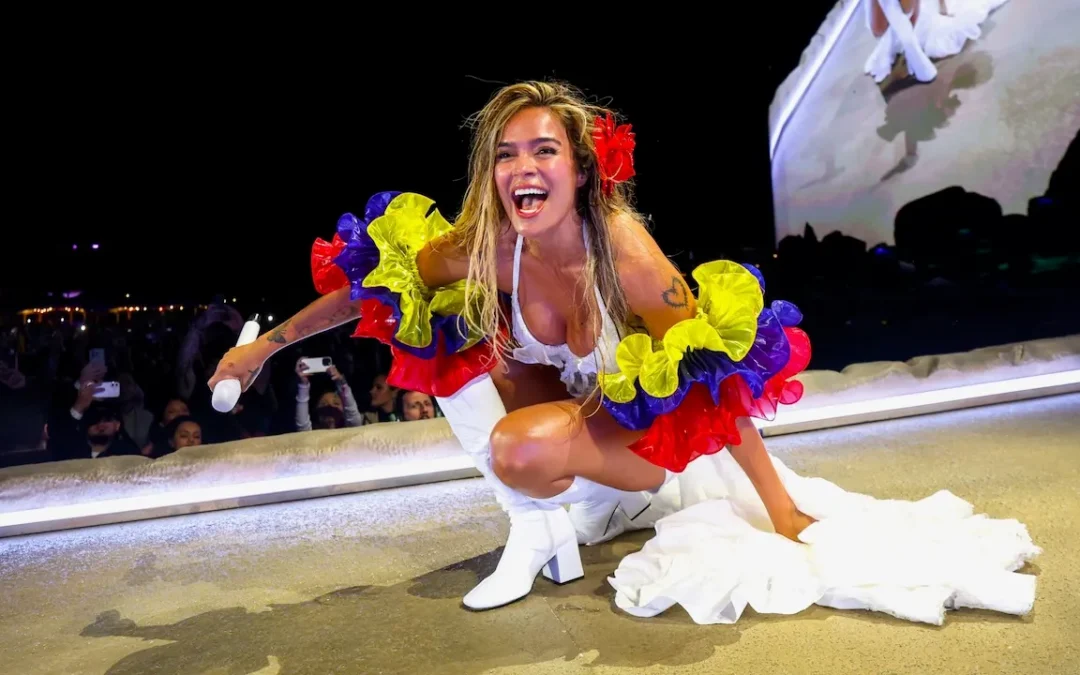
On Sunday, April 12, Karol G became the first Latin woman to headline Coachella in the festival’s 27-year history (Bain, Billboard, 2026). Not the first woman. The first Latina woman in 27 years. Let that number sit with you for a moment — and then think about what it means that she didn’t just show up. She showed out. She delivered a two-story, cave-themed, maximalist production featuring an all-female mariachi band, five outfit changes including a skirt made in the colors of the Colombian flag, four surprise guests, a pool sequence, and a speech that brought tens of thousands of people to tears (Bain, Billboard, 2026).
This is the second time in three months that a Latin artist has stepped onto one of the most-watched stages in the world and made history — Bad Bunny headlined the Super Bowl halftime show in February, delivering a performance rooted in Puerto Rican culture (Bain, Billboard, 2026). Back to back. Two stages. Two cultural earthquakes.
And still, most brands are watching from the sidelines.
Coachella is now an important cultural event for the Latino community
Coachella has always been a cultural trend setter. What happens on that stage in Indio, California tends to signal where music, culture, and consumer attention are heading. And in 2026, what it’s signaling clearly is that Latino culture is not emerging — it has arrived, fully and loudly, at the center of mainstream American entertainment.
Karol G’s headlining set was broadcast via livestream to dozens of countries worldwide (Bain, Billboard, 2026). The crowd waved the flags of Colombia, Puerto Rico, Mexico, and El Salvador. Her speech conveyed that Latino artists and Latino audiences have been here, have been building, and are done being treated as secondary (Bain, Billboard, 2026).
For brands, this is not a cultural footnote. It is a strategic signal. According to the Hispanic Market Guide, U.S. Latinos are one of the fastest-growing consumer segments in the country — young, digitally engaged, and deeply brand loyal when a brand earns their trust (Hispanic Market Guide, 2025). The U.S. Latino economy reached $4.1 trillion in 2023, making it the fifth-largest in the world (Latino GDP Report, 2025). These are not niche numbers. These are the numbers of a primary audience.
One of the Most Powerful Out-of-Home Marketing Events
Here is where the strategic opportunity becomes concrete.
The road to Coachella has become its own marketing institution. The billboards lining Interstate 10 on the way to Indio are among the most anticipated, dissected, and screenshot media placements outside of Super Bowl Sunday (Shalhoup, Forbes, 2026). They are shared before most attendees have packed a bag. They are ranked, debated, and posted across every platform — organically, by some of the most culturally plugged-in consumers on the planet.
And that organic amplification matters enormously right now. According to Forbes reporting, nearly half of consumers — 49 percent — find out-of-home advertising more trustworthy than social media, and one-third of TikTok virality trends have started with or included OOH displays (Shalhoup, Forbes, 2026). In a media environment where trust in digital ads is declining and Gen Z is actively craving tangible, physical experiences — vinyl sales surpassed $1 billion in 2025 — OOH isn’t a legacy format (Shalhoup, Forbes, 2026). It’s a growth strategy.
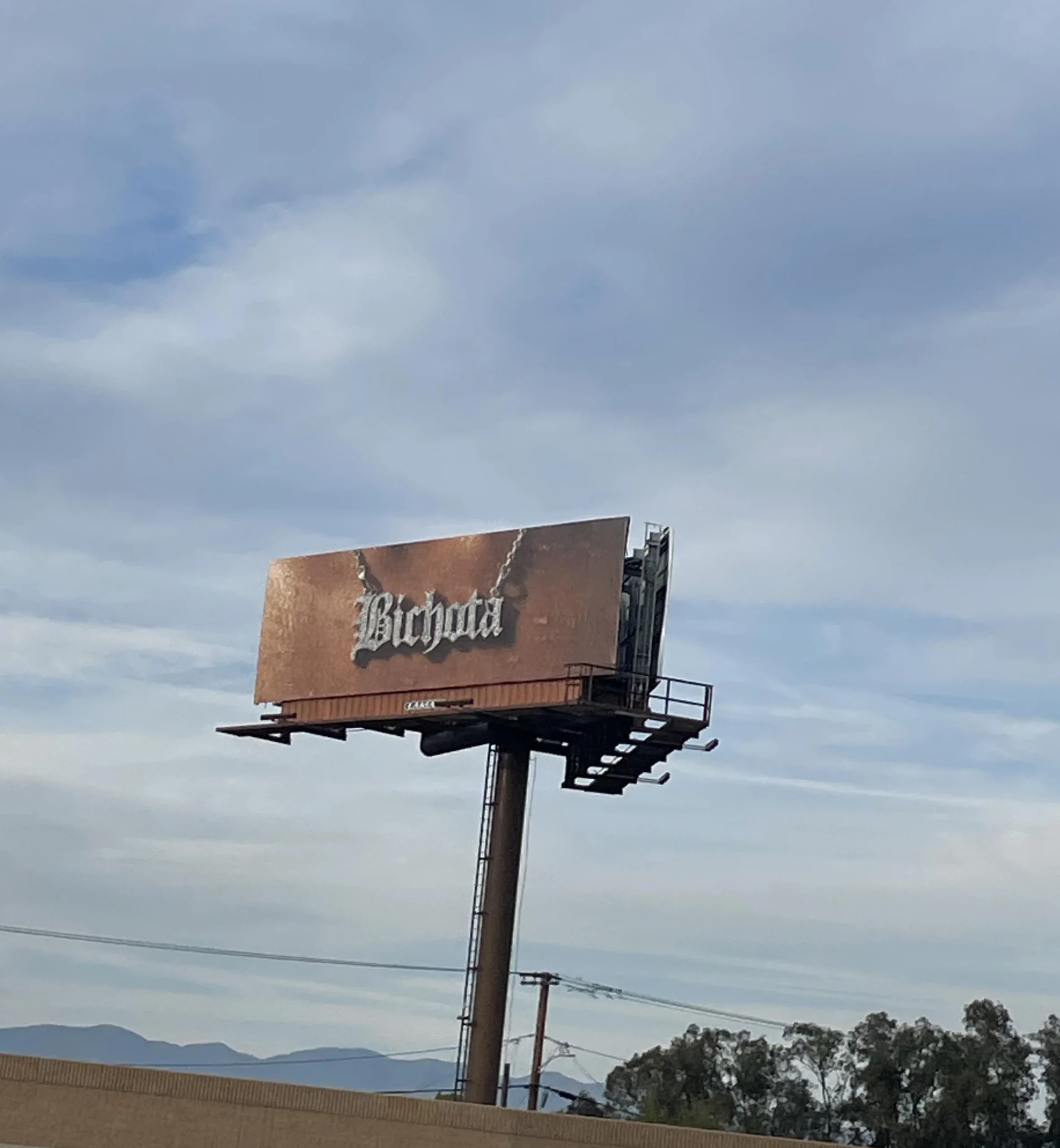
The brands that are winning this format at Coachella are doing so by leaning into specificity and cultural trust. The best billboards from this year’s cycle didn’t explain themselves — they assumed an informed, engaged audience and trusted them completely (Shalhoup, Forbes, 2026). That same principle applies directly to Latino marketing. Latino audiences, particularly bicultural Gen Z and millennial consumers, respond to cultural specificity. They respond to brands that understand the reference without needing to explain it.
Coachella, with a Latino headliner broadcasting to dozens of countries, a crowd waving Latin American flags, and an audience that skews young and culturally engaged, is exactly the kind of environment where that specificity pays off. A brand that shows up on that stretch of Interstate 10 — or in the digital conversation surrounding it — with something that speaks directly and authentically to Latino culture is not reaching a niche. It is reaching the cultural conversation itself.
Brands that participate here will be successful in the future.
Karol G said something in her speech that every brand strategist should write down.
She said she wanted everyone to feel welcome to her culture, her roots, her music. She said this is not just about her. This is about her community (Bain, Billboard, 2026). And then she told her audience — tens of thousands of people in person, millions more via livestream — don’t feel fear. Feel proud. Raise your flag.
That is not a performance moment. That is a community signal. And communities that feel seen, celebrated, and included in cultural spaces tend to extend that goodwill to the brands that show up alongside them — particularly when that brand presence feels genuine rather than opportunistic.
Research on diversity representation in advertising suggests that perceived authenticity is associated with more positive consumer responses, while diversity efforts that are perceived as surface-level or performative tend to be associated with negative reactions (Campbell et al., 2023). The implication for brands at cultural moments like Coachella is clear: proximity alone is not enough. Cultural fluency — showing up with something that reflects an actual understanding of Latino identity, values, and community — is what distinguishes a brand that earns loyalty from one that gets scrolled past.
We have now watched Latino artists headline the Super Bowl and Coachella within the same three-month window. The audience is there. The cultural momentum is undeniable. According to the Hispanic Market Guide, Latino consumers are significantly more likely to engage with and remain loyal to brands that demonstrate authentic cultural understanding rather than seasonal acknowledgment (Hispanic Market Guide, 2025).
The question for brands is no longer whether Latino audiences matter at cultural events like Coachella. That answer is obvious. The question is whether your brand is showing up with the cultural competency to be part of the conversation — or whether you’re going to watch another historic moment go by from the sidelines.
At Vaquero, we help brands show up to these moments with intention. Not as spectators — as participants. Let’s talk about what that looks like for you.
Works Cited: Bain, Katie. “Karol G Makes History at Coachella With Sexy, Celebratory Headlining Show: 5 Best Moments.” Billboard, 13 Apr. 2026. | Campbell, C., Sands, S., McFerran, B., & Mavrommatis, A. “Diversity Representation in Advertising.” Journal of the Academy of Marketing Science, vol. 53, published online 26 Dec. 2023, pp. 588–616. | Hispanic Market Guide. Hispanic Market Guide 2025. 2025. | Latino GDP Report. U.S. Latino GDP Report 2025. 2025. | Shalhoup, Olivia. “Coachella 2026 Billboards Gain Relevance As Gen Z Embraces Physical Media.” Forbes, 9 Apr. 2026.|