
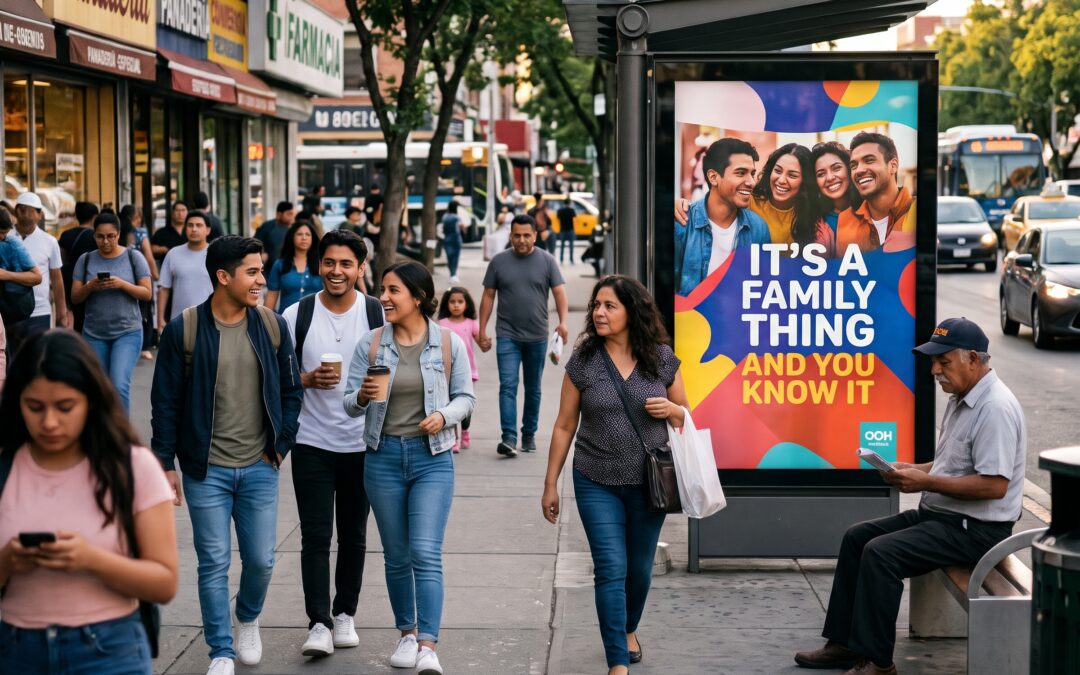
Hispanic OOH advertising is out-of-home media placed where Hispanic consumers live, work, commute and shop. It includes physical formats like billboards and bus shelters, and digital screens that can be targeted by ZIP code or specific zones. Its main job is simple: keep your brand top of mind in the moments right before people decide what to buy.
What is OOH advertising?
OOH stands for out-of-home. It is any ad people see outside their homes. Think billboards on the highway. Think posters at the bus stop. Think screens in a gas station, a mall or a grocery store.
OOH does not need a click, a login or an app. People see it as part of their daily routine. That makes it one of the few channels that reaches everyone on a street, not just people scrolling a feed.
Why does OOH matter for Hispanic marketing?
Hispanic consumers are concentrated in specific cities and neighborhoods across the U.S. That concentration is an advantage. A brand can show up exactly where its audience is, instead of spreading budget across a whole market.
OOH also speaks to culture in a public space. A message in Spanish, or in the Spanglish people actually use, on a neighborhood billboard says something clear: this brand sees you. That kind of recognition builds trust over time.
Finally, Hispanic families are often on the move together: commuting, running errands, going to church or to the stadium. Each trip is a chance to be seen.
What does “top of mind” mean, and why does it sell?
Top of mind is the first brand a person thinks of in a category. Ask someone to name a soda, a bank or a phone carrier. The first name they say is top of mind.
That first name has a real advantage. When a shopper stands in the aisle or opens a delivery app, they usually pick a brand they already recognize. OOH builds that recognition through repetition. People pass the same corner every day, and the same message sticks.
In short: OOH does not always close the sale, but it makes sure your brand is on the shortlist when the sale happens.
Physical vs. digital OOH: what is the difference?
OOH ads can be physical or digital. Both work. The right choice depends on your goal, budget and timing.
| Physical OOH | Digital OOH (DOOH) | |
| Examples | Billboards, bus shelters, wall murals, transit wraps | LED billboards, screens in malls, gas stations, stores and transit |
| Message changes | Fixed for the whole flight | Can rotate by hour, day or audience |
| Targeting | By location of the structure | By ZIP code, zone, time of day and sometimes audience data |
| Speed to launch | Needs printing and installation | Can go live quickly once creative is approved |
| Best for | Long-term presence and landmark visibility | Launches, promotions and time-sensitive messages |
Many brands combine both. A physical billboard holds a permanent spot in a key neighborhood. Digital screens add flexibility around it.
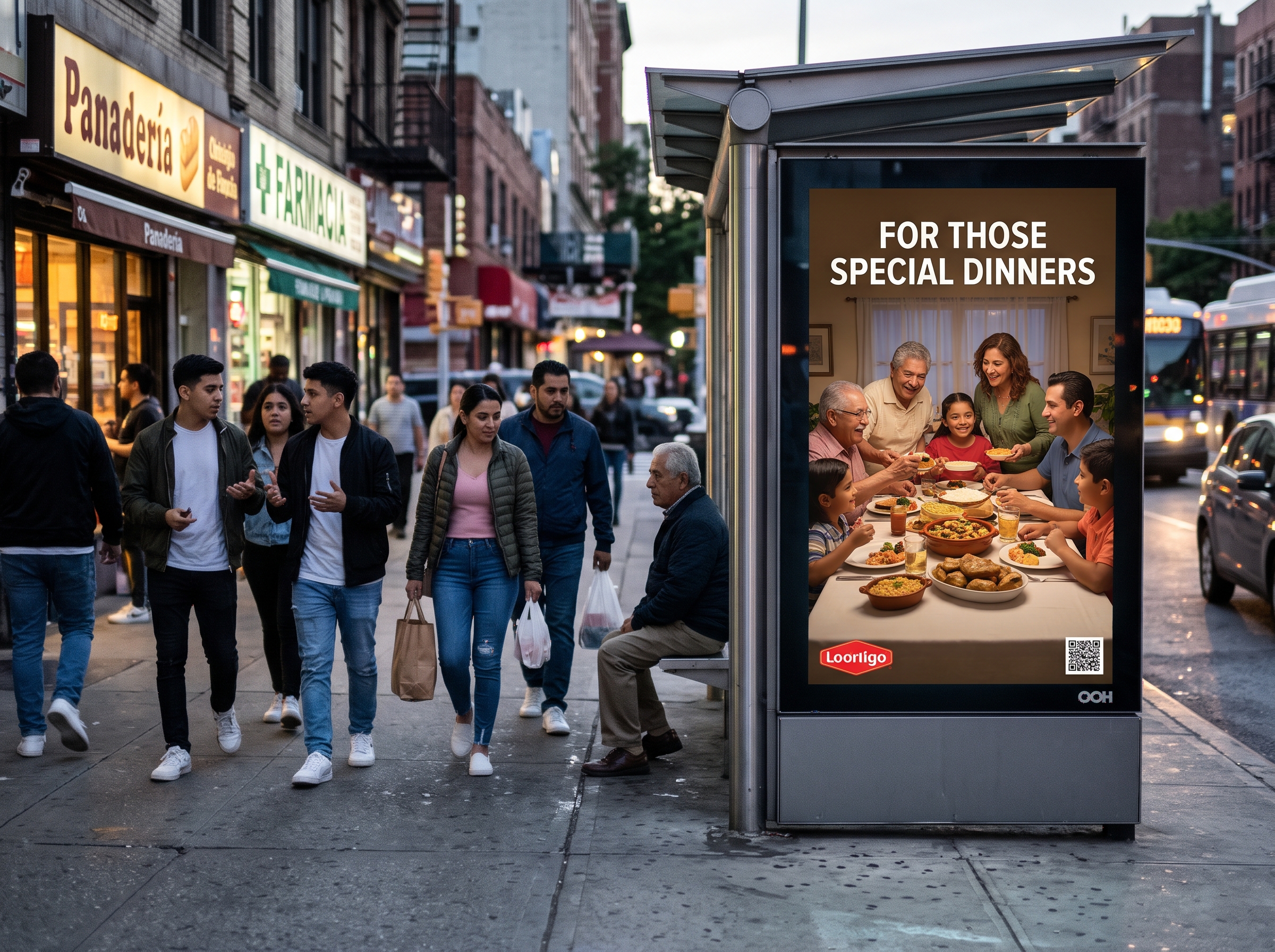
How can you target OOH by ZIP code or zone?
You start with where your audience is, not with where the inventory is. Then you match the two.
- Define your audience. Who are you trying to reach? First-generation families, bilingual young adults, small business owners?
- Map their ZIP codes. Use census data, your own sales data or store traffic to find the neighborhoods that matter most.
- Pick the zones. Choose the streets, transit lines, shopping centers or event venues inside those ZIP codes.
- Choose the format. Physical for lasting presence. Digital for flexible timing and rotating messages.
- Adapt the creative. Language, tone and cultural references should fit that community. Short copy works best; people only have a few seconds.
- Connect it to other channels. Retarget the same ZIP codes on mobile, social or streaming to reinforce what people saw on the street.
How do you measure OOH results?
OOH is harder to track than a click, but it can be measured. Common methods include impressions estimated by the media owner, brand lift studies, foot traffic to stores near the ads, and search lift in the targeted ZIP codes. Using a unique URL, QR code or promo code on the ad also helps connect the street to a sale.
Frequently asked questions
Is OOH still relevant in a digital world? Yes. OOH reaches people in the real world, where phones are often in pockets. It also complements digital: people who see a brand on the street often search for it later.
Should Hispanic OOH ads be in Spanish? It depends on the audience. Some communities respond best to Spanish, others to English or a natural mix. The key is to sound like the neighborhood, not like a translation.
What is the difference between OOH and DOOH? OOH is the full category of out-of-home ads. DOOH is the digital part of it: screens that can change messages and be scheduled or targeted.
Can small and mid-size brands afford OOH? Often, yes. Digital OOH in particular can be bought in smaller, targeted flights, which makes it more accessible than many brands expect.
The bottom line
OOH puts your brand in front of Hispanic consumers in the places they move through every day. Physical formats build lasting presence. Digital formats add precision by ZIP code, zone and time. Together, they help your brand become the one people remember when it is time to choose.