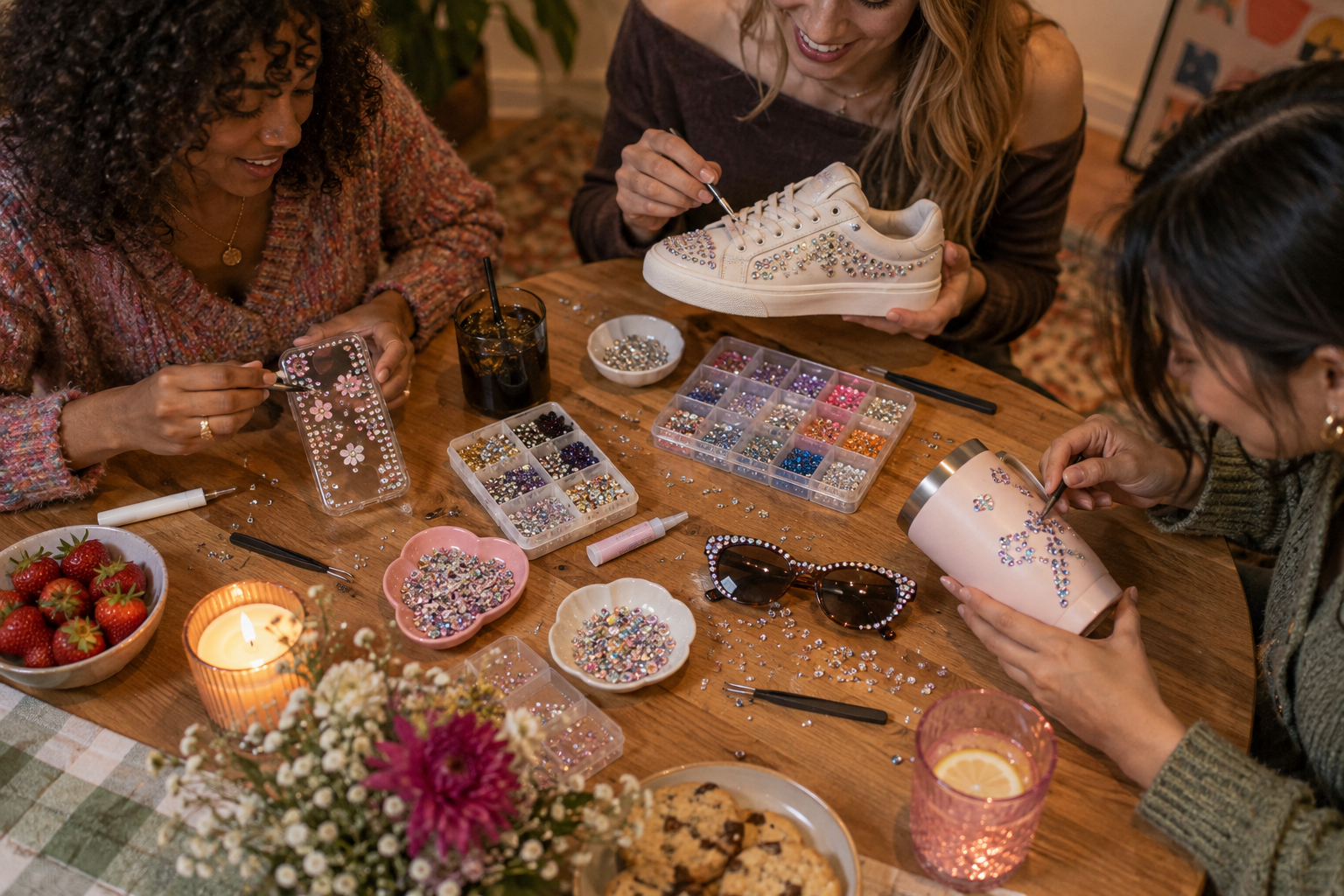
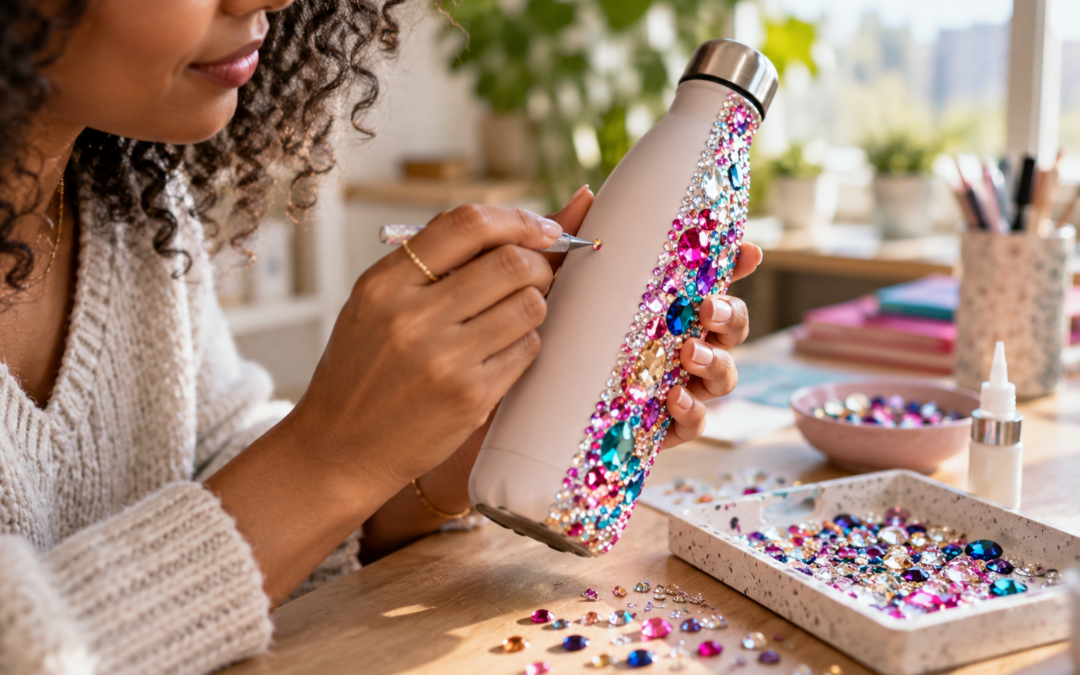
Water bottles covered in crystals. Rhinestone phone cases. Bedazzled sneakers, sunglasses, even birthday cakes. What started as a niche maximalist aesthetic turned into one of 2026’s biggest viral moments, jumping from a celebrity’s jewel-covered birthday cake into beauty, food, drinks, phone cases, nails and skincare almost overnight.
It’s easy to write this off as a passing TikTok moment. The numbers say otherwise: Pinterest searches for “bedazzle ideas” jumped 900% this year, alongside a matching surge in searches for bedazzle guns and rhinestone kits. That’s a mass consumer behavior with a growth curve most brands would kill for. And it’s a signal about what people actually want from the things they buy.
It’s Not About the Rhinestones
The crystals themselves are almost beside the point. What’s really happening is an act of ownership. A Stanley cup is identical to a million other Stanley cups until someone spends an afternoon covering it in rhinestones, and suddenly it’s not a Stanley cup anymore. It’s her Stanley cup.
This is personalization taken to its most literal, physical extreme. In a world of infinite mass production, the rhinestone is a small rebellion: proof that a person touched this object, made a choice about it, put their own hand into something that came off a factory line looking exactly like everyone else’s.
The Brand Lesson Hiding in Plain Sight
For decades, brands have chased personalization through data, recommendation engines, targeted ads, “products picked just for you.” That strategy is paying off: brands that lead on personalization report generating meaningfully more revenue than those that don’t, and the vast majority of shoppers say they’re more likely to keep buying from a company that gives them a tailored experience. Consumers have also grown far less patient with the alternative, most now say they actively tune out or ignore brand messages that feel generic.
But the rhinestone trend points to something data-driven personalization can’t fully deliver on its own: the feeling of authorship.
People want to be understood by a brand and do something to the brand’s product. They want the object to hold a trace of their own decisions, their color choices, their pattern, their effort. Algorithmic personalization proves a brand was paying attention. Physical customization proves the customer was.
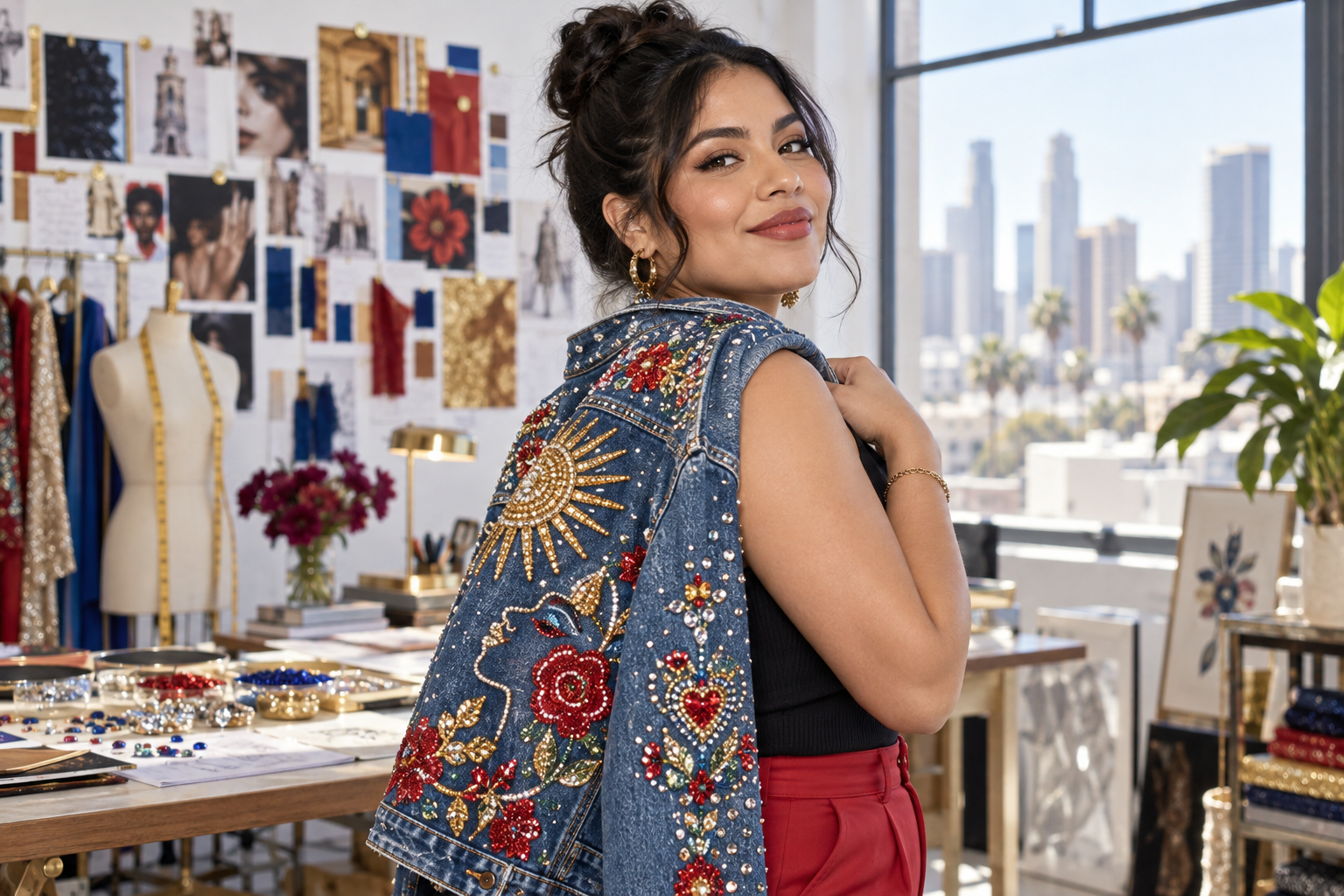
A few implications worth sitting with:
- Give people something to finish. The most beloved products lately aren’t complete out of the box, they’re a canvas. Blank tote bags, plain phone cases, neutral sneakers. The brand’s job is to make the raw material good enough that customization feels worth the effort, not necessary to fix a flaw.
- Customization beats curation. Algorithmic personalization is invisible, it happens behind the scenes, and the customer often doesn’t feel it happening. Physical customization is loud, visible, and shareable. One produces a better ad. The other produces a better feed post.
- Imperfection is part of the value. A hand-bedazzled water bottle is never perfectly symmetrical, and that’s exactly why it works. Brands obsessed with polish sometimes forget that a little roughness reads as real, and real is what personalization is ultimately trying to prove.
- Community forms around the process, not just the product. Rhinestone tutorials, bulk-buy crystal hauls, “get ready with me” bedazzling videos, the trend generates content and connection long before anyone actually uses the finished object. Brands that can build a ritual around their product earn attention that lasts far longer than a single transaction.
The bedazzling trend is about people looking at something mass-produced and refusing to leave it that way.
Brands that understand this, that build products flexible enough to be finished by the people who buy them, are the ones that turn ordinary objects into something customers are proud to have made their own.
Personalization used to mean “we know what you want.” Increasingly, it means “we made room for what you’ll do next.” That’s the shift worth paying attention to.
At Vaquero, we watch trends like bedazzling for what they reveal about the audiences our clients are trying to reach, and this one lines up almost perfectly with what we already know about multicultural, and especially U.S. Hispanic, consumers: identity expression, personalization, and pride of authorship aren’t nice-to-haves in the creative, they’re the strategy.