
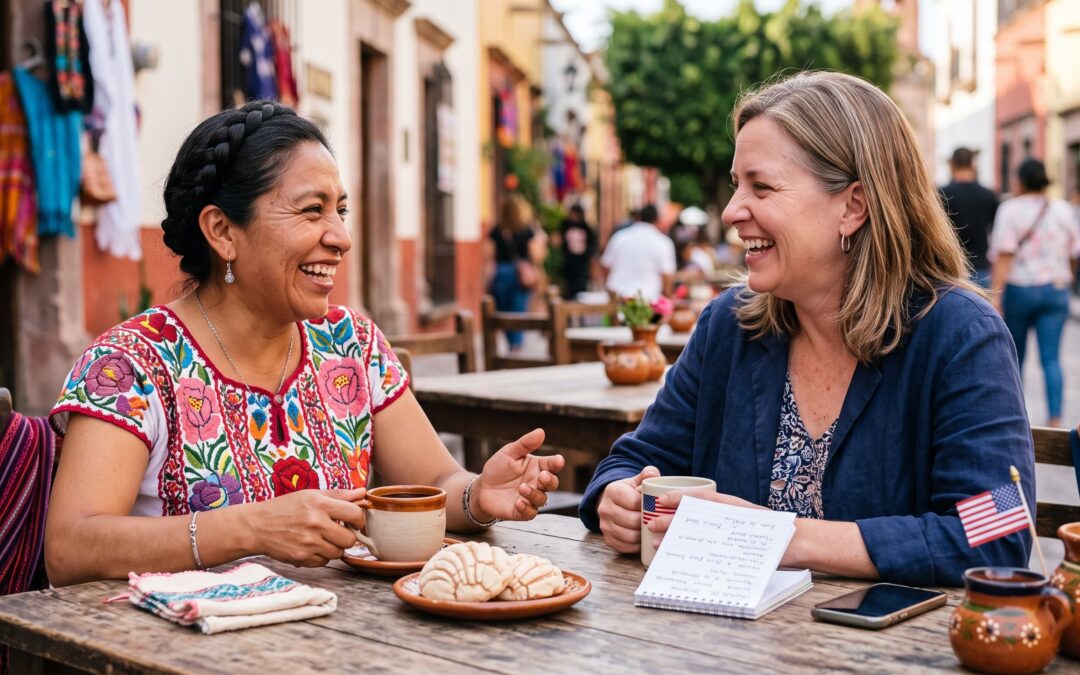
Translation converts words from one language to another while keeping the original meaning. Transcreation adapts the entire message, including tone, emotion, humor, and cultural references, so it creates the same reaction in a new audience. In Hispanic advertising, translation works for informational content. Transcreation is the better choice for anything meant to persuade.
What is translation?
Translation is the process of converting text from a source language into a target language. The goal is accuracy. A good translator keeps the meaning, facts, and structure of the original. The output should say the same thing, just in another language.
Translation works well when precision matters more than persuasion. Legal terms, product specs, and instructions are good examples.
What is transcreation?
Transcreation is a blend of “translation” and “creation.” It starts from the intent of the original message, not its exact words. The goal is to make the audience feel and act the same way the original audience would.
A transcreator may change the headline, the idioms, the imagery, or even the core concept. What stays fixed is the brand’s objective and personality.
Transcreation usually starts from a creative brief, not just a source text.
Transcreation vs. translation: side-by-side comparison
| Translation | Transcreation | |
| Main goal | Accuracy of meaning | Equivalent emotional impact |
| Starting point | Source text | Creative brief and campaign objective |
| What changes | Words and grammar | Words, tone, idioms, references, sometimes the concept |
| Who does it | Professional translator | Bilingual copywriter with cultural expertise |
| Best for | Manuals, legal copy, product info, FAQs | Slogans, ads, social content, campaign concepts |
| Deliverable | One faithful version | Several creative options, often with back-translation and rationale |
| Time and budget | Generally lower | Generally higher, since it is a creative process |
| Risk if misapplied | Message sounds stiff or unnatural | Message drifts from the brand if the brief is unclear |
In short: translation protects the words, and transcreation protects the intent.
When should you use translation?
Use translation when the content is informational and the audience needs exact details. Common cases include:
- Terms and conditions, disclaimers, and legal notices.
- Packaging information, ingredients, and product specs.
- User manuals, how-to guides, and support content.
- Website pages that are mostly functional, such as checkout or account settings.
Even here, the translation should be reviewed by a native speaker. A correct translation can still sound unnatural.
When should you use transcreation?
Use transcreation when the content needs to connect, persuade, or entertain. Common cases include:
- Slogans, taglines, and headlines.
- TV, radio, CTV, and digital video scripts.
- Social media campaigns and influencer content.
- Any message built on humor, wordplay, or emotion.
- Campaign concepts that rely on cultural moments or traditions.
A simple rule: if the English version was written by a copywriter, the Spanish version should be too.
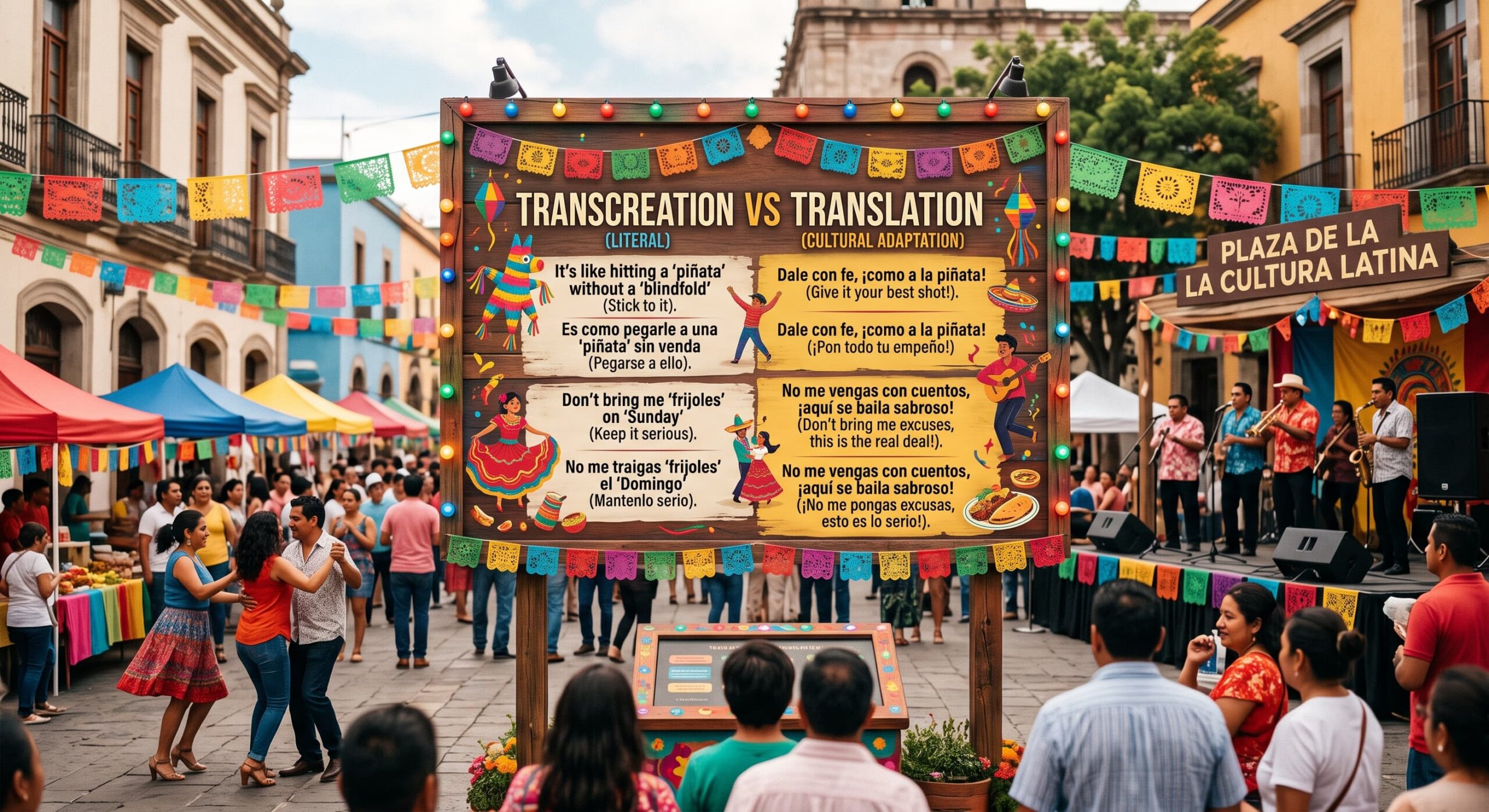
Why does transcreation matter for the U.S. Hispanic market?
The U.S. Hispanic audience is not one single audience. It includes people with roots in Mexico, Puerto Rico, Cuba, Central America, South America, and the Dominican Republic, among others. Vocabulary, humor, and references vary across these groups.
Language use also varies. Some consumers prefer Spanish, some prefer English, and many move between both. A literal translation rarely accounts for these differences.
Transcreation lets a brand choose the right words, tone, and cultural cues for the specific segment it wants to reach.
What can go wrong with a literal translation?
Literal translations fail in predictable ways:
- Idioms don’t travel. An English expression translated word for word often makes no sense in Spanish, or means something else.
- The same word means different things. “Guagua” means bus in the Caribbean but baby in parts of South America. A word that works for one audience can confuse another.
- Tone gets lost. Spanish distinguishes between formal “usted” and informal “tú.” Choosing the wrong one changes how close or distant the brand feels.
- Humor falls flat. Wordplay almost never survives direct translation.
- Length changes. Spanish copy often runs longer than English, which can break layouts, subtitles, and ad formats.
Each of these errors can make a brand look careless. With a Hispanic audience, that can cost trust.
How does the transcreation process work?
A typical transcreation workflow looks like this:
- Brief. The brand shares the objective, audience, tone, and mandatory elements.
- Cultural insight. The team defines which Hispanic segment is being targeted and what resonates with it.
- Creative adaptation. Bilingual copywriters develop several options.
- Back-translation and rationale. Each option is translated back into English, with notes explaining the creative choices.
- Review. Native reviewers from the target segment check tone and meaning.
- Testing. When possible, options are tested with real audiences before launch.
This process takes more time than translation. The payoff is a message that feels native rather than adapted.
Is transcreation the same as creating in-culture content?
No. Transcreation adapts an existing campaign for a new audience. In-culture creative is built from scratch around Hispanic insights, without an English original to start from.
Transcreation is ideal when a brand wants consistency across markets. In-culture creative works best when the brand wants to own a specific cultural space. Many brands use both.
Key takeaway
Translation is the right tool for information, and transcreation is the right tool for persuasion. For U.S. Hispanic audiences, most advertising falls in the second group. If your campaign needs to make people feel something, translate the intent, not just the words.
Planning a campaign for the U.S. Hispanic market? Let’s talk!