
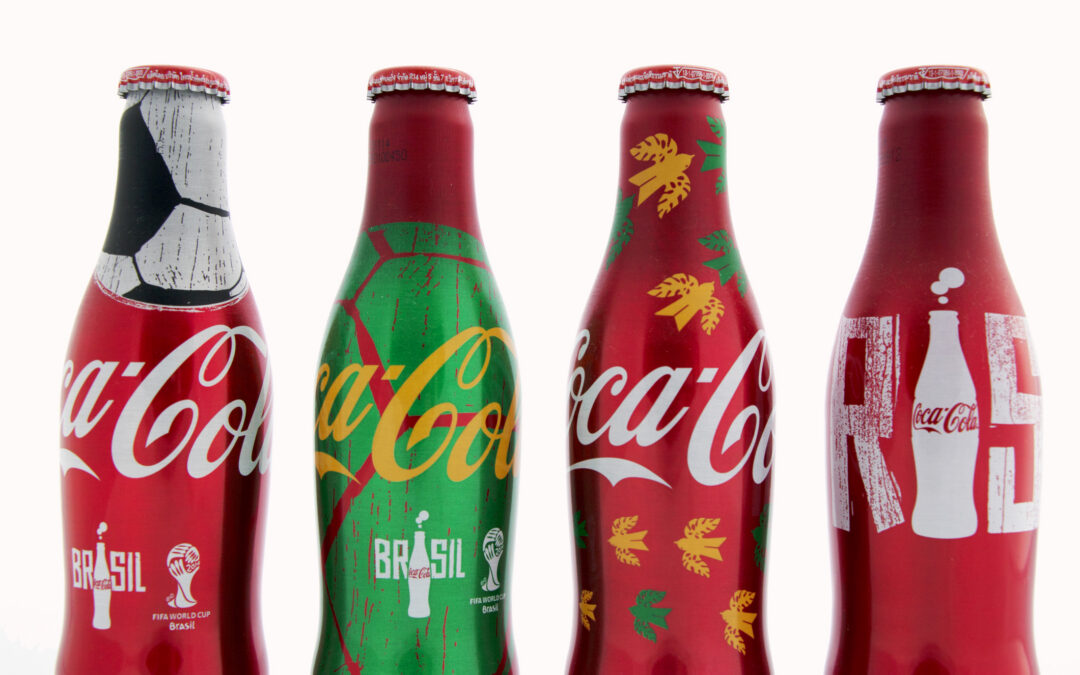
The 2014 World Cup gave Coca-Cola a choice: run a global campaign, or build a Latino community moment. They chose both — and the results still matter twelve years later.
The FIFA World Cup has always been a marketer’s dream. Billions of eyeballs, peak emotional investment, an audience already primed to feel something. The temptation for most brands is to buy reach and call it strategy. Coca-Cola, in 2014, did something harder. They built a campaign specifically for the U.S. Latino audience that didn’t just acknowledge the World Cup was happening—it turned the tournament into a shared cultural property.
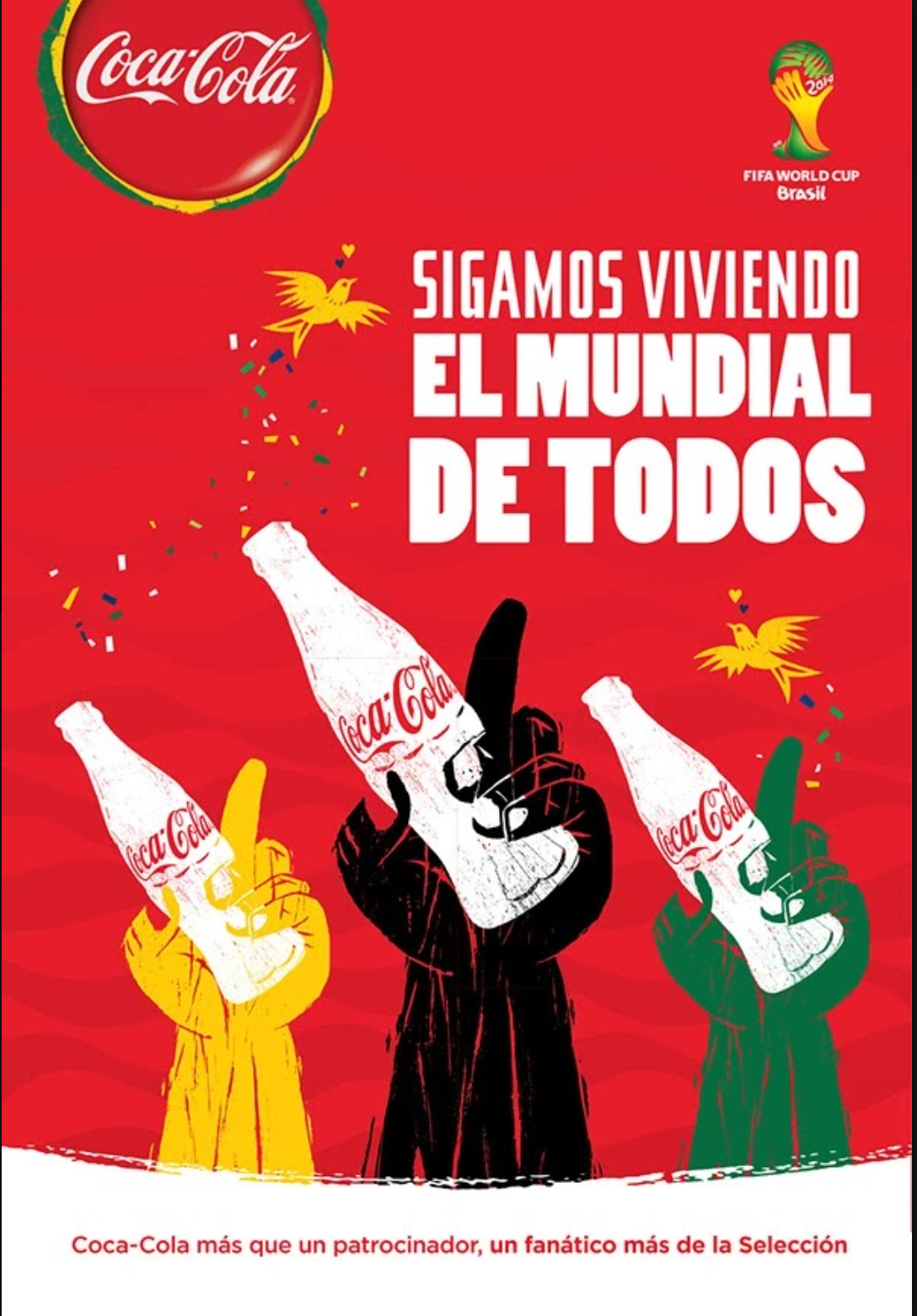
The campaign was called “Estadio de Todos”—which translates, roughly, as “Everyone’s Stadium.” And that name was doing real strategic work. It wasn’t neutral. It was a declaration. The World Cup belongs to this community as much as anyone. Come in. Take your seat. This is yours too.
The campaign was developed in partnership with Wunderman (now VML), Coca-Cola’s multicultural agency of record at the time—a detail that matters. The decision to engage a culturally specialized agency reflects a fundamental strategic posture: this audience requires dedicated expertise, not a repurposed brief. It’s a distinction that separates brands that get Latino marketing right from brands that approximate it.
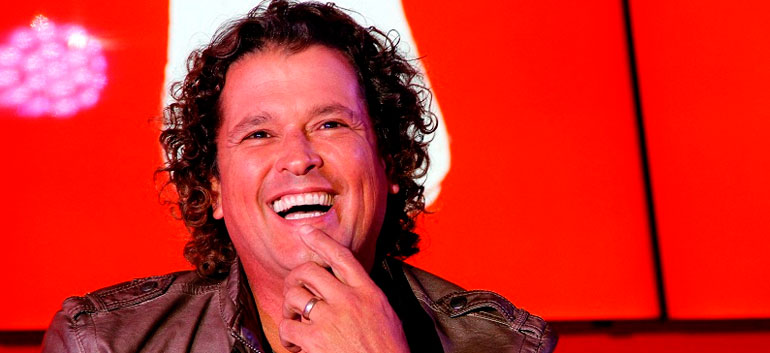
To anchor the campaign culturally, Coca-Cola brought in Colombian singer Carlos Vives—one of Latin America’s most beloved artists—to produce a bilingual version of the official World Cup anthem, “La Copa de Todos.” Vives’ inclusion wasn’t a celebrity placement. It was a cultural signal. Vives had already established himself as an artist who embodied the joy, community pride, and pan-Latino identity that soccer tends to activate. His involvement told U.S. Latino audiences: Coca-Cola understands what this moment means to you, and they’ve brought someone who lives it to help you celebrate it.
A global brand, at the most-watched sporting event on Earth, making a deliberate and architecturally separate investment in the U.S. Latino audience—not as a footnote to the general market strategy, but as a distinct creative and cultural commitment.
Coca-Cola didn’t market to Latino fans. They built something for them—and the strategy behind it is a framework every brand should study heading into 2026.
Three strategic decisions made “Estadio de Todos” work. Each one maps directly to principles that research on Latino consumer behavior consistently reinforces.
First, the campaign built community participation, not passive viewership. The platform wasn’t a broadcast. It was interactive. Users could engage with content, watch programming, and participate in the broader cultural moment of the tournament (Korzenny et al., 2017). Research in Hispanic marketing consistently identifies collectivism as one of the most powerful drivers of Latino consumer engagement—the tendency for family and community to take precedence over individual experience, and for shared moments to carry more weight than personal ones (Korzenny et al., 2017). A passive ad buy doesn’t activate that. A participatory platform does.
Second, they chose Spanish-language digital as their primary channel, not a secondary one. The EstadiodeTodos.com microsite was built natively in Spanish—not as an afterthought, not as a translation layer, but as the primary experience (Korzenny et al., 2017). This matters for two reasons. One, it signals respect. Two, it converts. Spanish-dominant and bilingual Latino audiences who encounter a brand experience in their preferred language tend to respond differently than those who are processing a translated version of something not made for them. The language of the platform was itself a message about who the platform was for.
Third, Carlos Vives functioned as a cultural bridge. His role in the campaign extended beyond a television spot. He produced the bilingual version of the World Cup anthem, connecting the tournament’s global cultural moment to a specifically Latino musical identity. Research on diversity in advertising suggests that perceived authenticity is associated with more positive consumer responses, while approaches perceived as surface-level tend to generate reactance (Campbell, Sands, McFerran, & Mavrommatis, 2023). Vives was a credibility mechanism—someone whose presence told Latino audiences that Coca-Cola had done the cultural homework, not just the demographic math.
The platform also incorporated influential blogger partnerships—an early recognition that Latino digital audiences were not monolithic, and that community voices carried weight that brand voices alone could not replicate (Korzenny et al., 2017). Brands today call this “creator strategy.” Coca-Cola was already operationalizing it in 2014.
Taken together, the strategy achieved what the research literature calls “accuracy of representation”—depicting a group’s experience in a way that is consistent with how they actually live it (Campbell et al., 2023). Latino fans don’t watch the World Cup in isolation. They watch it with family, with their community, in Spanish, with music on, with flags on the wall. “Estadio de Todos” was built around that reality. Not around a demographic profile.
The World Cup is back on U.S. soil. The audience is bigger, more digital, and more economically powerful than it was in 2014. The brands that paid attention to what Coca-Cola did then have a head start.
The 2026 FIFA World Cup kicks off June 11 in Mexico City—the opening match on Mexican soil, before the tournament travels through eleven U.S. host cities and concludes at MetLife Stadium on July 19. And no audience has more at stake culturally than the U.S. Latino community.
According to FranData, 73 percent of U.S. Hispanics identify as soccer fans—and soccer fandom has grown approximately 57 percent over five years (FranData, 2025). Nearly 44 percent of U.S. Latinos plan to actively follow the 2026 World Cup, the highest engagement intent of any audience segment surveyed (For Soccer, 2025). According to the Latino GDP Report, the U.S. Latino economy reached $4.1 trillion in 2023, making it the fifth-largest economy in the world (Latino GDP Report, 2025). This is not a niche audience. It is the single most engaged segment for this tournament, inside the most economically powerful multicultural market on Earth.
The lesson from “Estadio de Todos” is not that you need a microsite. It’s that you need intention. Coca-Cola didn’t accidentally build something that resonated with Latino fans. They made deliberate decisions—dedicated agency, dedicated platform, culturally specific talent, Spanish-first execution—because they understood that this audience was not going to be moved by the general market version of the campaign. And they were right.
Hispanic fans are also 39 percent more likely to recommend a brand that sponsors a sport they follow, and 37 percent more likely to remain loyal to that brand over time (Hispanic Market Guide, 2025). The ROI on getting this right is not just a campaign metric. It’s a long-term brand relationship with one of the most loyalty-oriented consumer communities in the U.S. market.
In 2026, the World Cup isn’t just returning to North America. It’s arriving in the middle of a Latino cultural moment unlike anything this country has seen. The tournament opens in Mexico City. Multiple U.S. host cities—Miami, Dallas, Houston, Los Angeles—have some of the largest Latino populations in the country. The audience is in the streets. They’re in the watch parties. They’re on TikTok. They’re driving this tournament’s cultural energy more than any other segment.
The question for brands is the same one it was in 2014: Are you going to build something for them?
At Vaquero, we help brands build campaigns that don’t just reach Latino audiences—they earn them. If you’re ready to show up to this moment the way it deserves, let’s talk.
Works Cited
Campbell, C., Sands, S., McFerran, B., & Mavrommatis, A. “Diversity Representation in Advertising.” Journal of the Academy of Marketing Science, vol. 53, published online 26 Dec. 2023, pp. 588–616. I FranData. FranData 2025 Hispanic Soccer Fan Report. 2025. I For Soccer / forsoccer.com. 2026 FIFA World Cup Interest Report. 2025. I Hispanic Market Guide. Hispanic Market Guide 2025. 2025. I Korzenny, Felipe, Sindy Chapa, and Betty Ann Korzenny. Hispanic Marketing: The Power of the New Latino Consumer. 3rd ed., Routledge, 2017. I Latino GDP Report. U.S. Latino GDP Report 2025. 2025.