
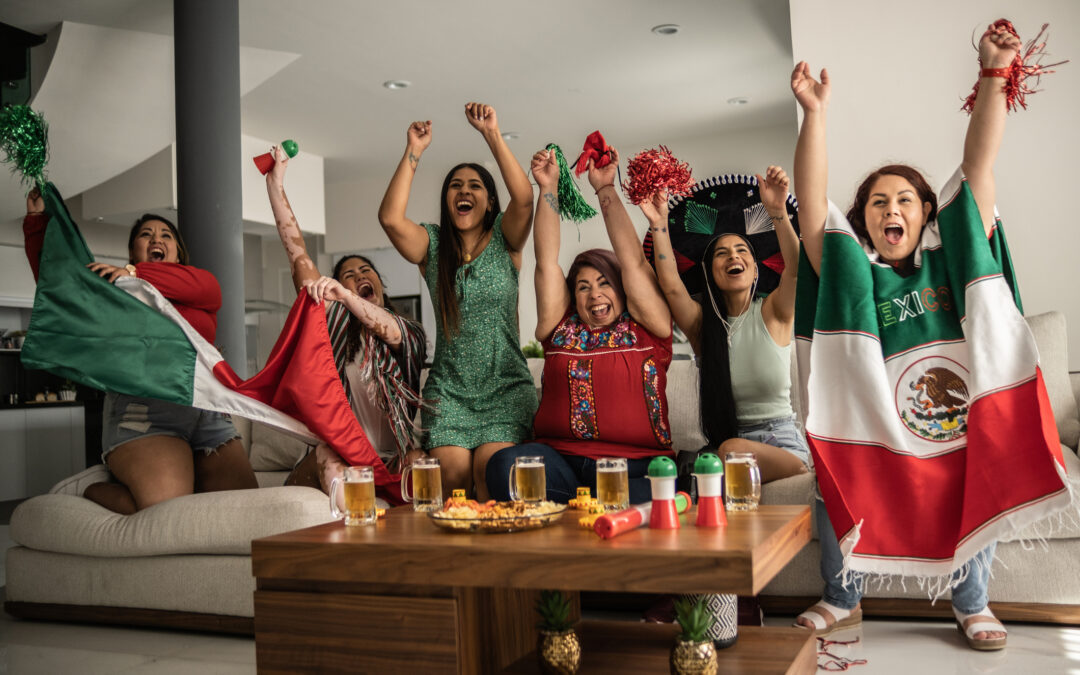
The group stage ends June 27. The knockout round starts June 28. And emotionally, the tournament is just getting started.
Here’s what most brand strategists get wrong about the World Cup: they think the opening match is the moment. They plan for the kickoff, scramble to have something out for the group stage, and then coast — or worse, go quiet — once the bracket narrows.
That is exactly backwards.
The group stage is the warm-up. It’s where casual fans tune in, where allegiances get established, where the noise builds. The knockout round — starting June 28, running through the quarterfinals, the semifinals on July 14 and 15, and the final at MetLife Stadium on July 19 — is where the emotional intensity of this tournament peaks. Every match is elimination. Every game carries national pride, stakes, and the kind of collective tension that makes people stop everything they’re doing and gather around a screen.
For brands that haven’t activated yet, or haven’t activated well: the window is still open. But it requires moving smart, moving fast, and understanding exactly who is driving the energy in this tournament. The answer to that last part hasn’t changed. It’s U.S. Latino fans — and they are more engaged now than they were on June 11.
A practical playbook for late-stage, culturally intelligent entry. No official FIFA deal required.
Let’s dispense with the excuse that brands most often reach for at this point in a major tournament: “We’re not an official sponsor, so there’s nothing we can do.” That’s not a strategy. It’s a deflection.
You do not need to be Lay’s or Adidas to show up meaningfully for Latino fans during the knockout stage. What you need is cultural intelligence and the willingness to act on it. Here’s how.
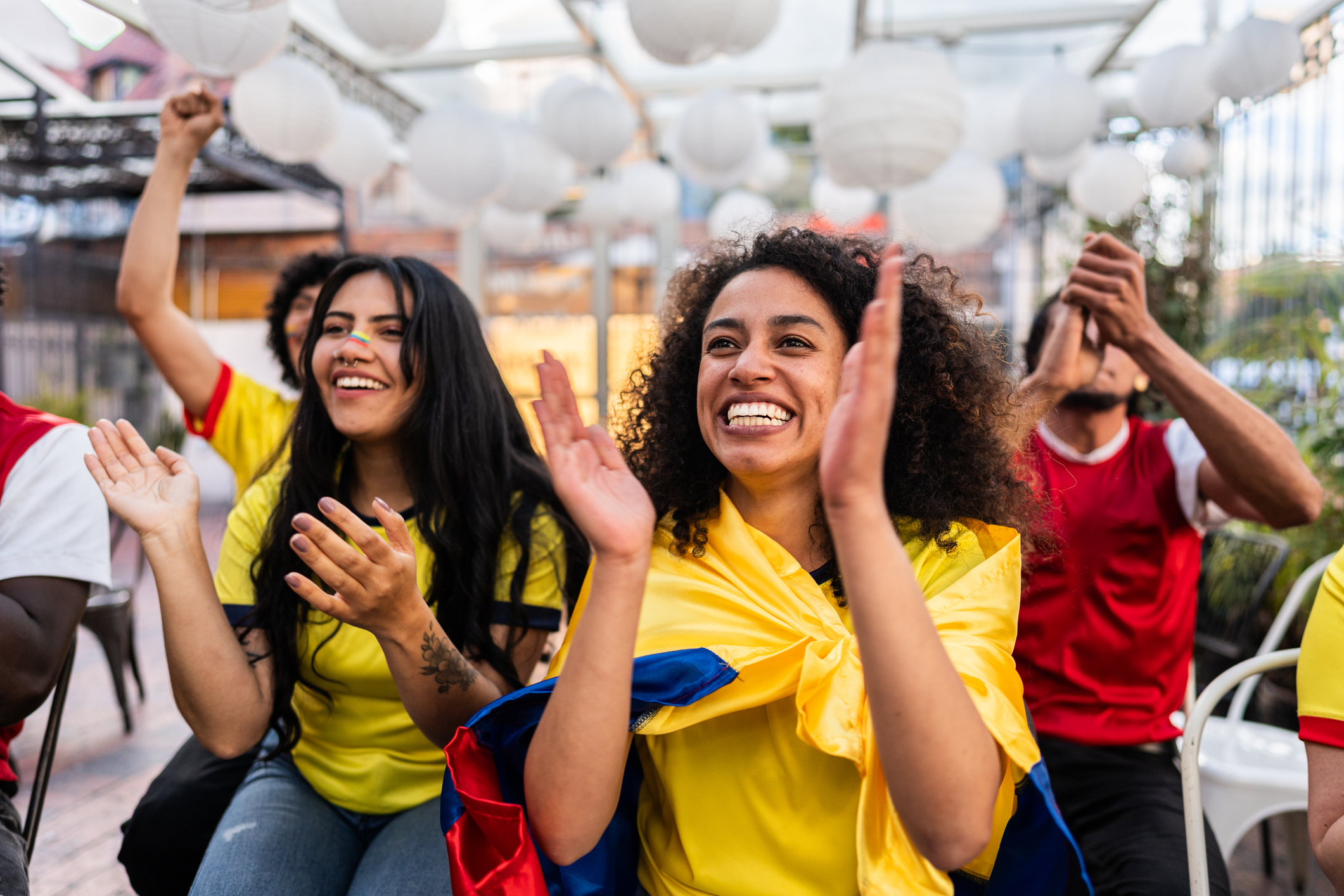
Own a platform where Latino fans are already gathering.
According to the Hispanic Market Guide, Latino sports fans are 38 percent more likely than the general population to use TikTok for sports news (Hispanic Market Guide, 2025). They are 72 percent Gen Z or millennial — the most digitally active generation of fans in the country (Hispanic Market Guide, 2025). If your brand is not producing bilingual, culturally fluent content on TikTok and Instagram right now, you are sitting out the most active fan conversation in American social media. You don’t need a sponsorship to post. You need a point of view and a creator who speaks the language — literally and culturally.
MRI-Simmons data shows that Hispanic consumers are significantly above average on the First-In-Line Consumer Scale — more likely than the general population to adopt new trends, try new products, and serve as influencers within their social networks (MRI-Simmons, 2025). When a Latino fan shares a brand moment from the knockout round, it doesn’t stop with them. It travels to their family group chat, their friend circle, their community. That is word-of-mouth with a multiplier that most brands never fully price in.
Partner with Latino soccer creators, not just soccer accounts.
There is a meaningful difference between a soccer creator who happens to be Latino and a Latino creator whose fandom is rooted in the cultural experience of being a Latino soccer fan. The latter brings something the former can’t: the specific perspective of someone who grew up watching these games in Spanish, whose family has allegiances that cross multiple national teams, whose experience of the World Cup is woven into memory and identity rather than just sports consumption. That specificity is what builds trust with Latino audiences — and trust is what translates to purchase intent. Research in Hispanic consumer behavior identifies loyalty and reciprocity as core value orientations: Latino consumers tend to stay with brands they know and trust, and respond meaningfully to brands that demonstrate genuine understanding of their community (Korzenny, Chapa, & Korzenny, 2017).
Sponsor a watch party in the right zip codes.
The knockout round gives you a clear calendar — one high-stakes match at a time, each one a defined community moment. Brands that sponsor local watch parties in high-Latino-density markets during the Round of 32 and quarterfinals are not arriving late. They are arriving exactly when the stakes — and the emotional payoff for the audience — are highest. According to FranData, 33.1 percent of all U.S. soccer fans identify as Hispanic (FranData, 2025). That audience is concentrated in markets your brand almost certainly already operates in: Los Angeles, Miami, Houston, Dallas, New York, Phoenix. Find the bar, the community center, the park where the watch party is happening. Show up with something real. Not a banner. Not a logo. Something that says you understand what this moment means to the people in that room.
Run bilingual creative. Not translated — bilingual.
There is a difference between taking your English ad and dubbing it into Spanish, and building creative that moves between both languages the way bilingual Latino consumers actually communicate. MRI-Simmons reports that 74 percent of Spanish-dominant Hispanic adults agree that companies who advertise in Spanish respect their culture and want their business — and even among English-dominant Hispanics, 54 percent say the same (MRI-Simmons, 2025). The signal is not just about language preference. It’s about cultural acknowledgment. Code-switching in creative — the natural movement between English and Spanish that reflects how bicultural audiences actually speak — is not a production decision. It is a relationship signal.
Tie your brand to a national team narrative.
This tournament features 48 nations. Among U.S. Latino fans, the allegiances are plural and layered — Mexico, Colombia, Argentina, Brazil, Ecuador, Honduras, the USMNT for bicultural fans who hold both identities. The knockout stage is when those allegiances become most visible and most emotionally charged. A brand that acknowledges the specific national identity of the communities it serves — not generically “Latino fans” but specifically the Mexican-American fans in Houston or the Colombian fans in Miami — is operating at a level of cultural specificity that registers as respect (Campbell, Sands, McFerran, & Mavrommatis, 2023). And respect, in the research on Latino consumer behavior, is associated with the kind of brand loyalty that outlasts the tournament.
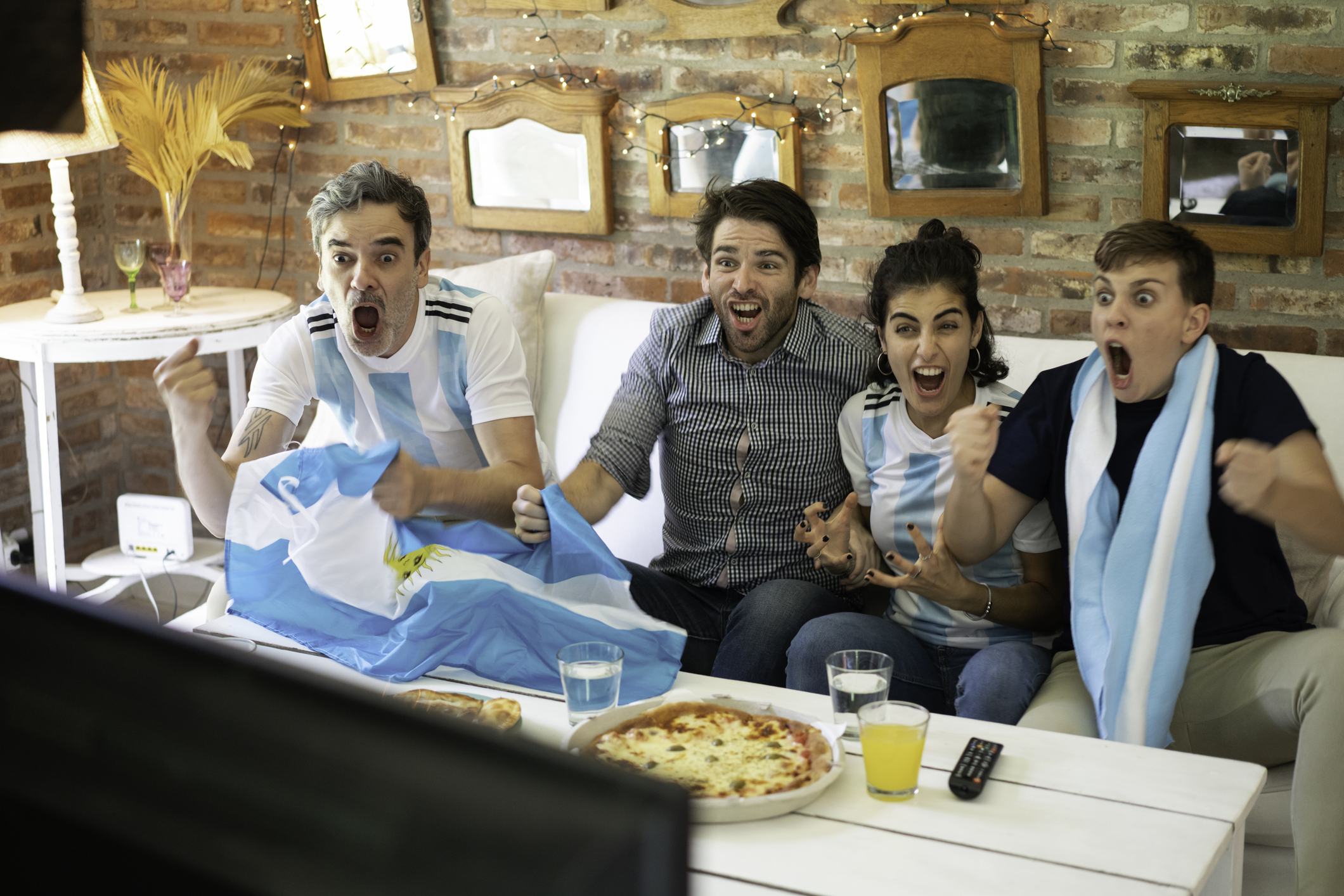
The brands that show up for the last 30 days with cultural intelligence will be remembered. The ones that sat it out won’t be.
The numbers on this audience are not ambiguous. According to For Soccer, 87 million Americans report interest in the 2026 World Cup, and nearly 44 percent of U.S. Latinos plan to actively follow the tournament — the highest engagement intent of any segment surveyed (For Soccer, 2025). Soccer fandom among U.S. Hispanics has grown approximately 57 percent over the past five years (FranData, 2025). The U.S. Latino economy reached $4.1 trillion in 2023, making it the fifth-largest in the world (Latino GDP Report, 2025).
This is not a hard audience to find. It is a hard audience to earn — because Latino consumers can tell the difference between a brand that showed up because they care and a brand that showed up because someone ran the reach numbers on a World Cup media buy.
Research on diversity representation in advertising makes this point directly: perceived authenticity is associated with more positive consumer responses, while efforts that read as performative or opportunistic tend to generate reactance — the kind of negative consumer response that is harder to recover from than simple inaction (Campbell et al., 2023). The risk of showing up badly is real. But the risk of not showing up at all — during the most emotionally activated sporting event this country has hosted in decades, with the most engaged audience in the room being the audience your brand has been trying to reach — is larger.
The knockout round is not a consolation bracket for brands that missed the opening week. It is the main event. Forty-seven million people watched the 2022 World Cup final in the United States. The 2026 tournament, played on U.S. soil, across host cities including Miami, Dallas, Houston, Los Angeles, and New York, with a final at MetLife Stadium, is expected to shatter that number.
The question is not whether you should be in this conversation. The question is whether you have the cultural fluency to be in it the right way — and whether you’re willing to move fast enough to matter.
At Vaquero, we help brands build campaigns that connect with Latino audiences with the cultural intelligence this moment demands. If you’re ready to stop watching from the sidelines, let’s build something powerful.
Works Cited
Campbell, C., Sands, S., McFerran, B., & Mavrommatis, A. “Diversity Representation in Advertising.” Journal of the Academy of Marketing Science, vol. 53, published online 26 Dec. 2023, pp. 588–616. I For Soccer / forsoccer.com. 2026 FIFA World Cup Interest Report. 2025. I FranData. FranData 2025 Hispanic Soccer Fan Report. 2025. I Hispanic Market Guide. Hispanic Market Guide 2025. 2025. I Korzenny, Felipe, Sindy Chapa, and Betty Ann Korzenny. Hispanic Marketing: The Power of the New Latino Consumer. 3rd ed., Routledge, 2017.i Latino GDP Report. U.S. Latino GDP Report 2025. 2025. I MRI-Simmons. The State of the Hispanic American Consumer 2025. MRI-Simmons USA, Spring 2025.
#WorldCup2026 #LatinoMarketing #HispanicMarketing #KnockoutStage #MulticulturalMarketing #BrandStrategy #SoccerMarketing #HispanicConsumers #BilingualMarketing #VaqueroAdvertising