
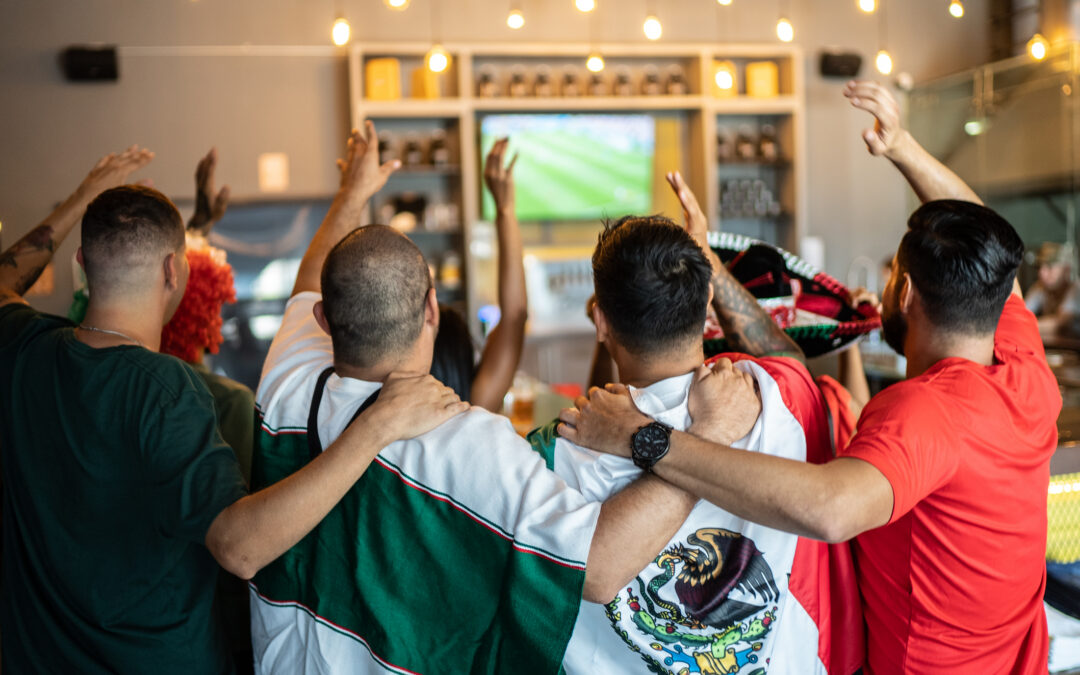
The World Cup is one week in, and the brands paying attention already know: the most important venue isn’t a stadium. It’s the living room.
The 2026 FIFA World Cup kicked off June 11 in Mexico City with Mexico versus South Africa at Estadio Azteca — the first tournament opener on Mexican soil in 32 years — and the energy has been exactly what anyone paying attention to U.S. Latino fandom data expected. Flags in neighborhoods. Group chats erupting in real time. Bars at capacity three hours before kickoff. Families rearranging schedules around match times. The tournament is a week old and it’s already transformed how millions of people in this country are spending their days.
For brands, something important is visible in the group stage right now: the activations that are resonating with Latino audiences are not the ones with the biggest media budgets. They’re the ones built around the right cultural insight. The watch party isn’t a backdrop for your campaign. For Latino fans, the watch party is the experience — and the brands that understand that are playing a fundamentally different game than the ones that don’t.
Let’s look at what’s actually happening on the ground, and what it tells us.
Three activations. Three levels of cultural intelligence. One clear lesson.
Buchanan’s Whisky: Community-first, street-level, and culturally specific.
Before a single match was played, Buchanan’s Whisky — Diageo’s brand and the official North American whisky supporter of the 2026 World Cup — launched what may be the most culturally intentional activation of the tournament. They built the Buchamión: a 27-foot mobile celebration truck outfitted with sixteen speakers, anchored by the voice of legendary fútbol commentator Andrés Cantor, and sent it on a tour from New York City through multiple U.S. host cities all the way to Mexico City.
The campaign — “¡Nos Vamos al Mundial!” — centers on a custom-recorded chant by Cantor, a dance contest awarding World Cup tickets, and surprise appearances at fan gatherings in Queens, Brooklyn, and Latino neighborhoods throughout the host city corridor.
This is not a sponsorship activation. This is a community investment. The Buchamión goes where Latino fans already are. It doesn’t build a branded experience and invite people to come to it. It shows up at the corner, on the block, in the neighborhood — where the celebration is already happening — and becomes part of it. That is the difference between brand presence and brand participation.
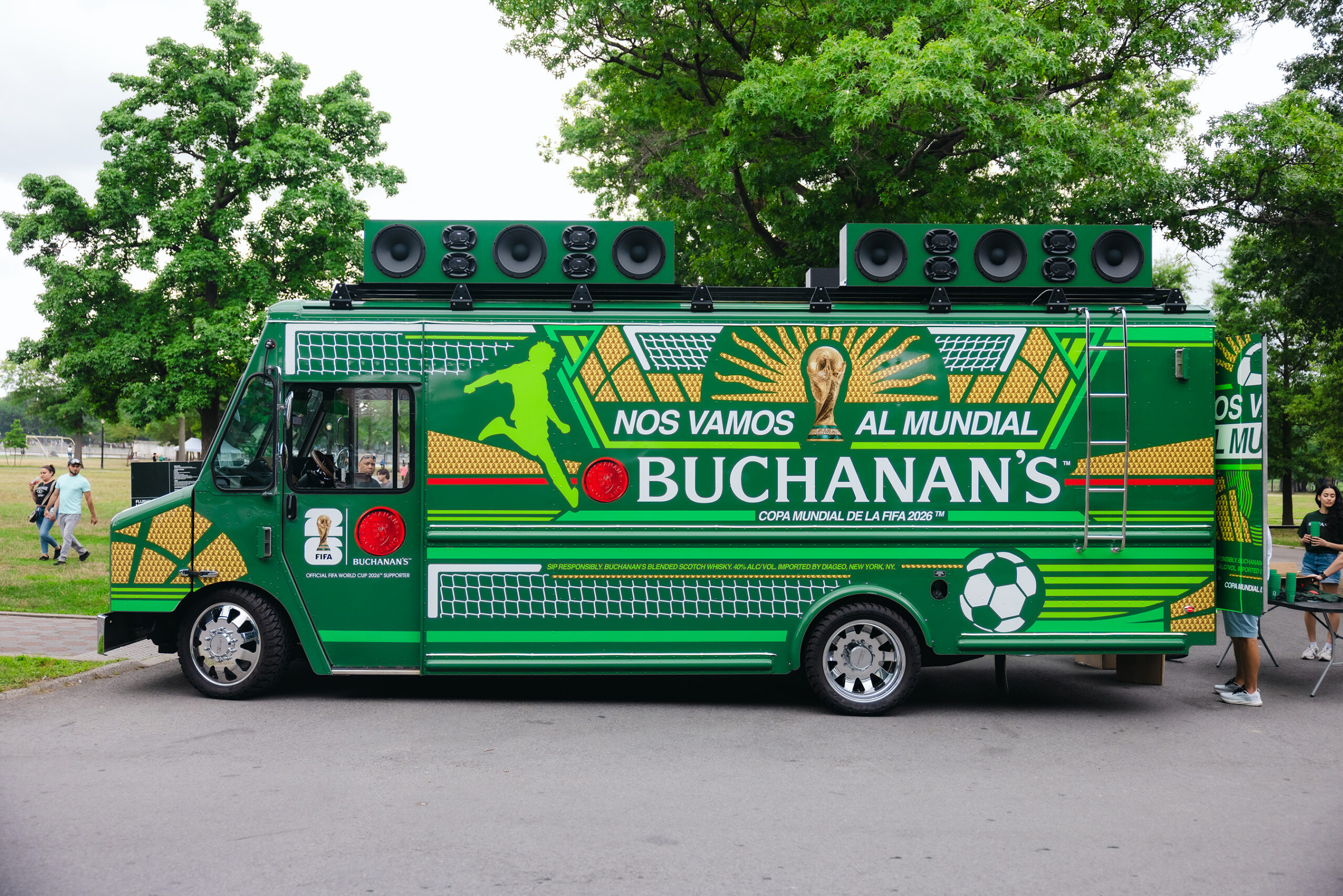
Research in Hispanic consumer behavior identifies collectivism as one of the most important value orientations among Latino consumers: the family and the community take precedence over the individual, and shared experience carries more motivational weight than individual appeal (Korzenny, Chapa, & Korzenny, 2017). A 27-foot truck with Andrés Cantor’s voice blasting through sixteen speakers in a Queens parking lot isn’t a media buy. It’s a communal ritual moment. It’s designed exactly the way Latino fandom actually functions — loud, shared, in the street, with your people.
Andrés Cantor matters here too. His voice is not a celebrity placement. It is a cultural institution. For generations of Latino soccer fans in the United States, Cantor’s call — his legendary, extended ¡GOOOOL! — is the sound of the World Cup. His inclusion in this campaign is accuracy of representation in its most elemental form: Buchanan’s found the cultural touchstone and built the activation around it (Campbell, Sands, McFerran, & Mavrommatis, 2023).
Home Depot’s “We All Have a Name“: Player fit as cultural credibility.
Home Depot’s 2026 World Cup campaign features USMNT striker Ricardo Pepi alongside Home Depot associates. Pepi, who was born in El Paso and grew up in a Mexican-American household on the Texas-Mexico border, is one of the most culturally specific talent decisions any brand has made for this tournament.
This is not a soccer star endorsement. This is a choice to center a player whose biography — bicultural, border-raised, Mexican-American — maps directly onto the lived experience of millions of Latino Home Depot customers in markets like Dallas, Houston, Los Angeles, and Phoenix. The campaign’s title, “We All Have a Name,” operates as an acknowledgment of identity. You are not anonymous here. You belong here.
The Hispanic Market Guide makes a critical strategic point: Latino consumers who see themselves accurately represented in brand communications tend to respond with higher brand affinity and purchase intent — and the brands that demonstrate authentic cultural understanding, rather than seasonal acknowledgment, are the ones that earn long-term loyalty (Hispanic Market Guide, 2025). Home Depot chose a player who doesn’t need a Hispanic campaign to feel Latino. He already is. That credibility doesn’t have to be explained. It’s just true.
This connects directly to what LERMA/ has been building for Home Depot ahead of 2026 — a longer strategic effort to address a perception gap with younger Latino millennials who hadn’t historically seen the brand as for them. The Pepi campaign is the culmination of that positioning work: Home Depot is not sponsoring a soccer event. They are telling a specific community that this store, this brand, is theirs.Dove Men+Care’s “Ritual House“: Host city presence with matchday mechanics.
Dove Men+Care is activating across World Cup host cities — Kansas City, New York, Miami — with what they’re calling “Ritual House,” an experiential matchday concept that ties product drops to ticket giveaways and influencer partnerships around pregame rituals. The framing is smart: caring for yourself before the match, the routine that gets you ready, the ritual that connects individual preparation to collective celebration.
The host city selection matters. Miami and New York are two of the largest Latino DMAs in the country — Miami ranks third among Latino TV households nationally, New York second (Hispanic Market Guide, 2025). Building physical activations in those markets during the group stage isn’t an afterthought. It’s a deliberate decision to put the brand where the audience density is highest and where Latino fans will experience the tournament most intensely.
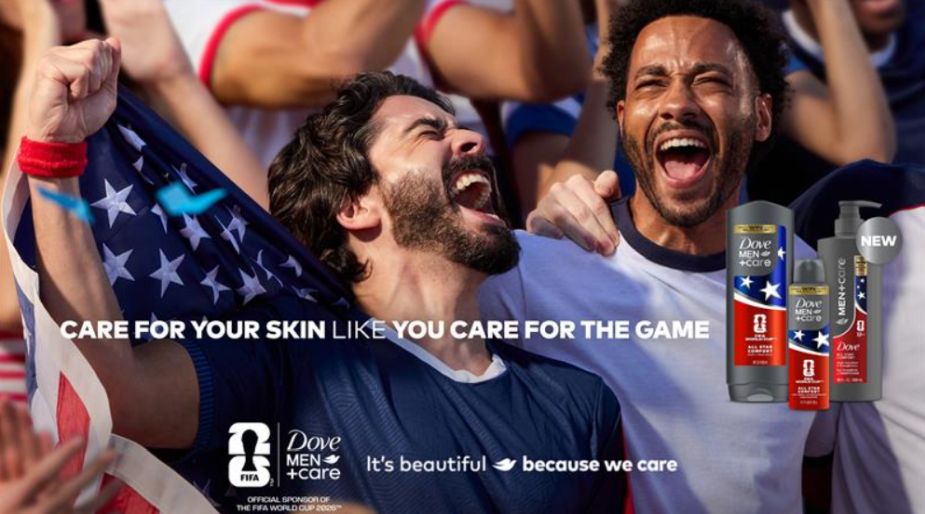
What Dove is doing correctly is tying the brand to a behavior — the pregame ritual — rather than just a moment. Latino fans are not casual viewers who tune in for the final and forget about the sport. According to FranData, 73 percent of U.S. Hispanics identify as soccer fans, and soccer fandom has grown approximately 57 percent over five years (FranData, 2025). This is a deeply committed audience. A brand that attaches itself to the ritual of fandom — not just the event — positions itself inside the relationship, not beside it.
The watch party is the unit of Latino fandom. Every brand should be building toward it.
Here is the strategic frame that ties all three of these activations together — and the one that should change how every brand approaches the rest of this tournament.
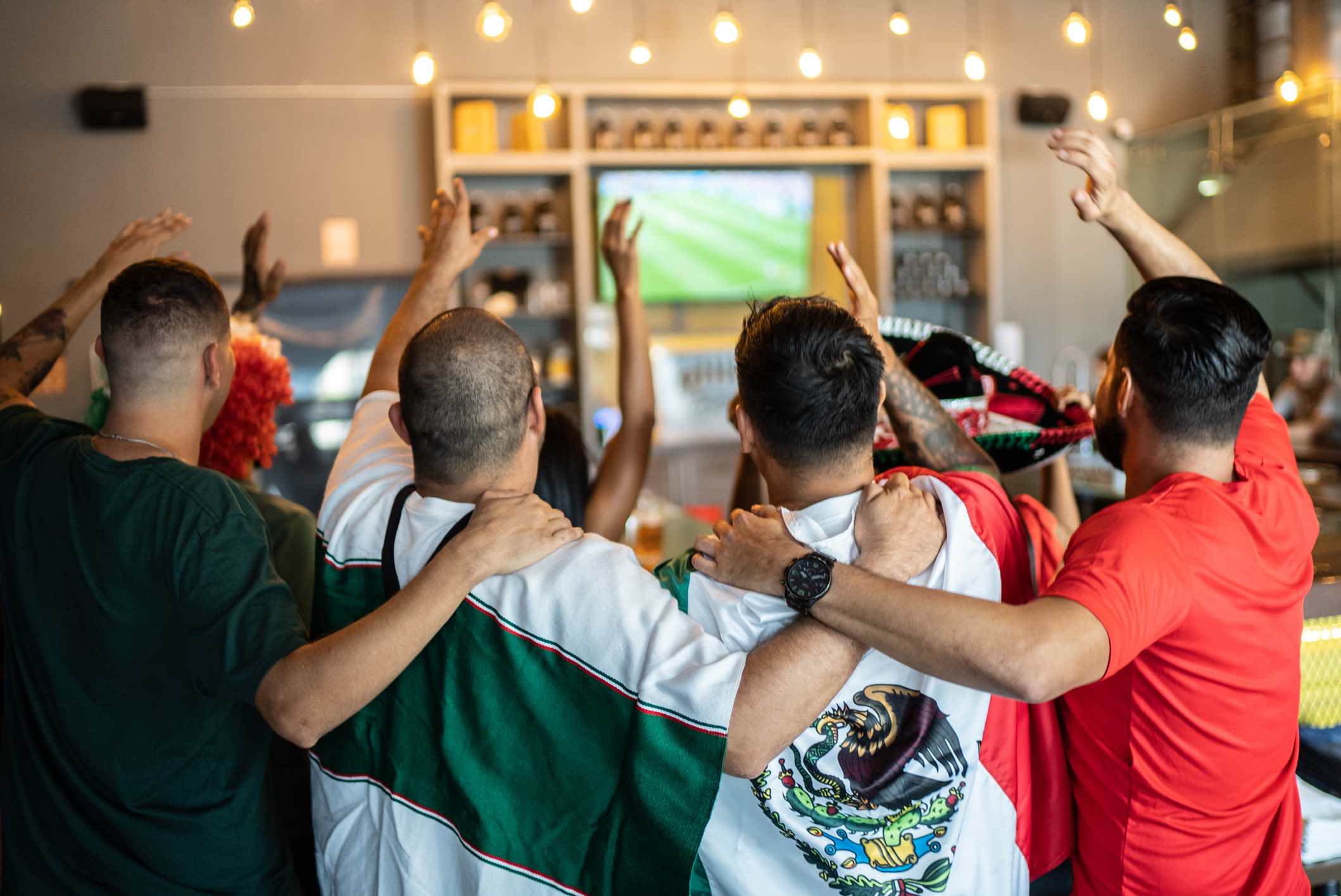
For Latino audiences, the watch party is not a viewing format. It is the primary cultural expression of soccer fandom. It is where the collectivist orientation that Korzenny et al. (2017) identify as central to Latino consumer behavior becomes most visible: the family around the screen, the neighbors crowding the yard, the community bar erupting together on a goal. The brand that earns a place in that room — that becomes part of the ritual rather than adjacent to it — earns something that media spend alone cannot buy.
Latino fans are 39 percent more likely to recommend a brand that sponsors a sport they follow, and 37 percent more likely to stay loyal to that brand over time (Hispanic Market Guide, 2025). But those numbers assume a baseline of authentic presence. They don’t apply to brands that ran a logo placement and called it a World Cup strategy. They apply to Buchanan’s going to Queens. They apply to Home Depot casting Ricardo Pepi. They apply to Dove showing up in Miami during the group stage, where the temperature of Latino fandom is at its peak.
According to NielsenIQ, the brands that will win in a rapidly shifting consumer marketplace are the ones that lead with relevance — not reach (NielsenIQ, 2026). The watch party is the most relevant space in American consumer culture for the next five weeks. And Latino fans are leading the energy inside it.
The U.S. Latino economy reached $4.1 trillion in 2023, the fifth-largest in the world (Latino GDP Report, 2025). The audience is here. The fandom is documented. The activations that are working tell you exactly what the strategy needs to be: community-first, culturally specific, built for the ritual — not around it.
At Vaquero, we help brands find their entry point into moments like this one — with the cultural intelligence to make it count. The question isn’t whether to show up. It’s how. Let’s talk.
Works Cited
Campbell, C., Sands, S., McFerran, B., & Mavrommatis, A. “Diversity Representation in Advertising.” Journal of the Academy of Marketing Science, vol. 53, published online 26 Dec. 2023, pp. 588–616. I FranData. FranData 2025 Hispanic Soccer Fan Report. 2025. I Hispanic Market Guide. Hispanic Market Guide 2025. 2025. I Korzenny, Felipe, Sindy Chapa, and Betty Ann Korzenny. Hispanic Marketing: The Power of the New Latino Consumer. 3rd ed., Routledge, 2017. I Latino GDP Report. U.S. Latino GDP Report 2025. 2025. I NielsenIQ. “The New Rules of Relevance: Eight Predictions That Will Redefine CPG Growth in a Rapidly Shifting Marketplace.” 2026.